

What Do Deadhead Miles Cost When Fuel Prices Rise?
Deadhead miles are empty miles a truck runs without a paying load. ATRI estimates them at 16.7% of all truck miles. At November 2026 diesel prices, fuel alone costs about $0.83 per empty mile, roughly two-thirds more than a year ago. The best way for fleets to cut the unnecessary empty miles is to make the right decisions across which load to accept, which driver takes it, and where the truck ends up.
What Are Deadhead Miles in Trucking?
Deadhead miles, or empty miles, are miles a truck drives without paying freight: the run to a pickup, the reposition after a delivery. The trip home empty counts, too. Drivers and dispatchers call it “deadheading.”
ATRI’s 2025 cost report put empty miles at 16.7% of truck miles. That’s about one mile in six. ATRI’s announcement of its 2026 report, which covers 2025, says only that deadhead mileage “remained elevated.”
An empty mile burns diesel, churns through driver hours, and wears down equipment, and none of it gets billed. Jake Dettmer, our SVP of Product, said it in ACT News: “Deadhead miles are often treated as a utilization problem when they are really a waste problem.”
How Much Does an Empty Mile Cost at Today’s Diesel Prices?
The U.S. on-highway diesel average was $6.292 a gallon the week of Nov. 2, 2026, $2.539 more than a year earlier, according to the EIA. The week of Sept. 21, it hit $6.529, the highest weekly average in EIA’s records (which start in 1994), beating the June 2022 peak of $5.810. EIA ties the price spike to constrained Middle East oil flows, higher crude prices, and what it calls “extreme tightness in diesel markets.”
ATRI put the average trucking cost per mile at a record $2.336 in 2025, or $1.854 without fuel. That leaves fuel at $0.482 a mile, about 20.6% of the total, in a year when diesel averaged $3.66 a gallon, per EIA.
Scaled to this month’s diesel price, that fuel figure comes to about $0.83 a mile, or roughly 31% of the cost of running a truck if nothing else moved.
Truckload and reefer operating margins were under 1% in 2025. Every empty mile comes straight out of those margins.
| One truck | 500-truck fleet | |
|---|---|---|
| Miles per year (hypothetical) | 100,000 | 50 million |
| Empty miles at 16.7% (ATRI data) | 16,700 | 8.35 million |
| Fuel on those empty miles, diesel $3.753 (Nov. 3, 2025) | ≈ $8,200 | ≈ $4.1 million |
| Fuel on the same empty miles, diesel $6.292 (Nov. 2, 2026) | ≈ $13,900 | ≈ $6.9 million |
| Added cost, year over year | ≈ $5,700 | ≈ $2.8 million |
| Fuel saved if empty miles fell 20% (Grand Island Express’s published result, not a projection for your fleet) | ≈ $2,800 | ≈ $1.4 million |
Illustrative. Fuel cost per mile is ATRI’s 2025 figure ($0.482, when EIA’s diesel average was $3.66) scaled to each week’s EIA diesel price: $0.49 in November 2025 and $0.83 in November 2026. Every cell multiplies the empty miles by those two rates, then rounds to the nearest $100 (one truck) or $0.1 million (fleet), so the rows add up. Fleet and mileage figures are hypothetical; the 500-truck, 100,000-mile example follows Jake Dettmer’s in ACT News. Sources: ATRI, EIA.
By the same estimate, one truck now spends about $110 more a week on fuel for miles that earn nothing.
EIA expects diesel to average $5.19 for 2026 and about $4.50 in 2027. Even that 2027 forecast, with prices falling, sits about 23% above 2025’s $3.66 average, so on EIA’s numbers an empty mile will still cost more next year than it did last year.
Why Do Fleets Run So Many Empty Miles?
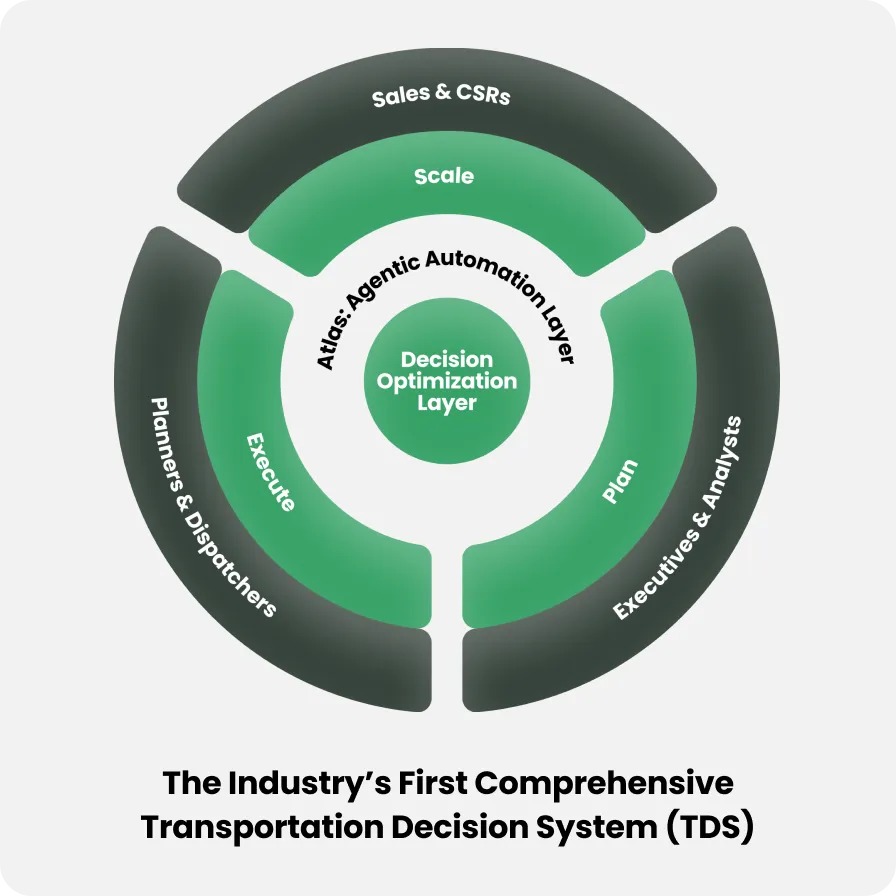
Most empty miles are set in motion before the truck moves, when loads are accepted, drivers are assigned, and trucks are repositioned one load or one region at a time, without a view of where each choice leaves the truck next.
The usual advice on deadhead points to load boards and backhauls: find freight for the truck that’s already empty. That helps, one truck at a time, after the empty mile is already on the schedule.
Avoid empty miles by making the right decisions upstream:
- Which loads to accept: A lane can look great on its own and still add empty miles nobody priced in.
- Which driver takes which load: Driver-to-load assignment sets where every truck starts its next move.
- Where the truck ends up next: Decisions run in sequence, so a load that looks profitable today can strand a driver in a weak market tomorrow.
The first decision shapes everything that follows.
The cost stays hidden because of how fleets keep score. In SupplyChainBrain, our SVP of Marketing, Erica Frank, walks through the numbers your fleet is graded on and how each one reports a decision after it’s made. Grade each region on its own, and it holds its trucks inside its borders at the network’s expense. As Erica puts it, “A load that made money isn’t the same as the best load that driver could have taken.”
Should a Fleet Eliminate Every Empty Mile?
No. Before you take a load just to avoid deadhead, ask where it leaves the truck. Jake made the point in Heavy Duty Trucking in October: a short empty reposition into a strong market can beat a loaded move into a weak one.
Deen Albert, VP of Operations at Grand Island Express, made the same observation from the operator’s perspective. As his HDT profile describes it, sometimes you run more empty miles to reach a load that makes more sense.
So deadhead percentage alone is the wrong metric. A truck can post a clean empty-mile number by hauling whatever is closest, then sit in a market with nothing to haul out. Jake’s better measure is revenue per truck per hour across a sequence of moves (loading, waiting, and repositioning included) against operating cost over the same stretch.
Go after the empty miles your network never needed. At $6 diesel, they’re worth finding.
How Do Fleets Cut Empty Miles Without Buying New Equipment?
New trucks, alternative fuels, and aero kits cut fuel burn, but they take capital and years. Erica argues in Transport Topics that the biggest wins come before a wheel turns. Here are three ways to secure those wins.
1. Evaluate Freight Earlier
Weigh a tender against the whole network before you accept it. A load that pays well into a thin market can leave the truck with an empty run just to get back out. Decide which loads to accept with the next move in view.
2. Match Drivers and Equipment Across the Whole Network
Treat every driver and truck as one pool and assign across the whole network. When each region holds onto its own trucks, a driver can deadhead home in one region while a load sits uncovered in the next one over. Network-level assignment puts that truck on the load.
3. Free Planners for the Calls That Need Judgment
Manual dispatch means a planner clearing a queue one tender at a time, with more driver-and-load comparisons than any planning floor can make. Automate the routine comparisons. They come out consistent, and planners and dispatchers spend their day on the exceptions. As Deen Albert’s HDT profile puts it, automation does the math, and people make the decisions.
What Carriers Report
Grand Island Express, a Nebraska reefer carrier running 150+ trucks across 38 states, reports these platform-driven results:
- Empty Miles: −20%
- Revenue per truck per week: +17.3%
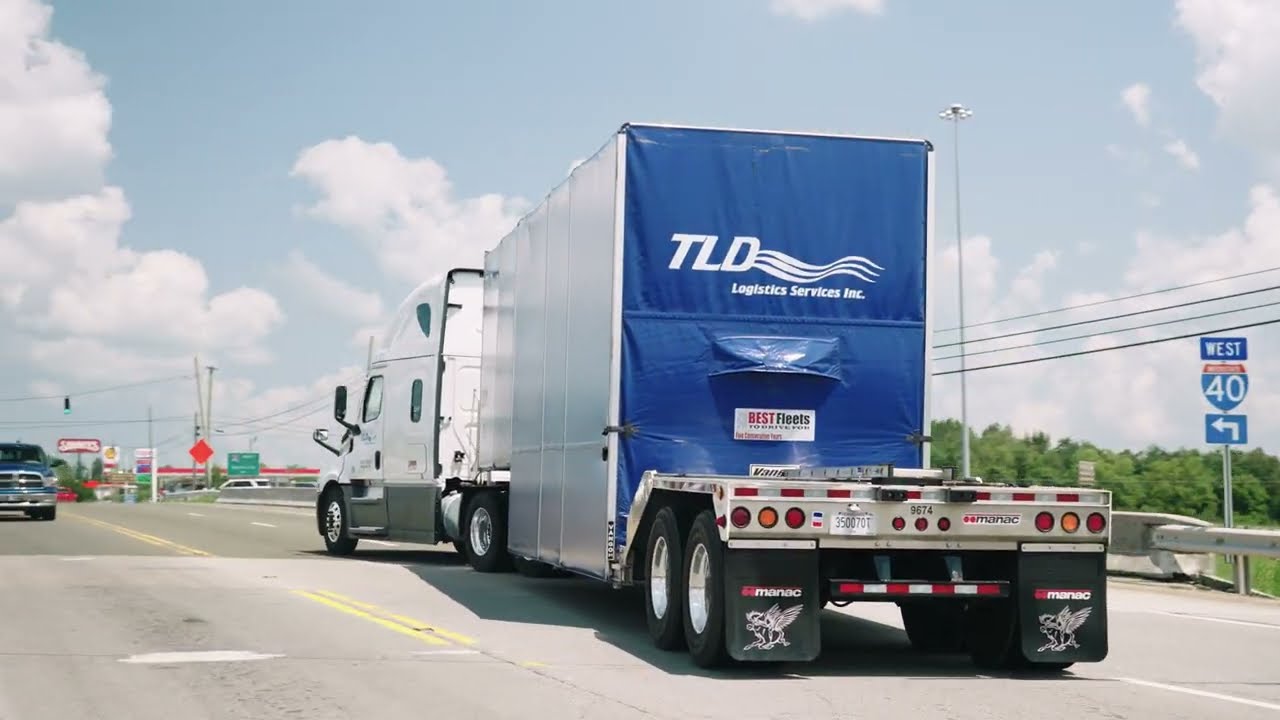
At TLD Logistics, loads assigned by Optimal Dynamics ran 8.2% less deadhead than non-assigned loads in the same operation in Glass OTR, and 13.2% less in Non-Glass OTR. The reduction in empty miles came from better network-wide decisions and greater visibility across brokerage, spot and dedicated freight (TLD Logistics results).
Leonard’s Express also reported fewer empty miles and steadier driver schedules.
Why Is the Greenest Mile the One You Never Run?
Every empty mile burns diesel and emits carbon without moving freight. The decision that removes it pays twice, in fuel and in emissions, with the trucks you already own.
Erica made that case in her Transport Topics byline: “The greenest mile is often the one you never needed to run.”
A customer made the same point at a Truck World 2026 panel in April. Zahi Mitri, VP of Innovation & Technology at Challenger Motor Freight, described the greenest mile as the one that doesn’t have to be driven, Truck News reported. He said better trip design and fewer wasted miles help both sustainability and driver productivity.
Frequently Asked Questions
How Do You Calculate Deadhead Percentage?
Divide empty miles by total miles and multiply by 100. A truck that runs 16,700 empty miles out of 100,000 total has a deadhead rate of 16.7%. Then break it out by lane, region, terminal, and driver to find where empty miles concentrate.
What Is a Good Deadhead Percentage for a Truckload Fleet?
ATRI publishes an industry average rather than a target. Its 2025 report put empty miles at 16.7% of truck miles in 2024. Compare your lane rates against it and your own trend. Don’t chase the lowest number: a low deadhead rate is not a win if it comes from loads that strand trucks in weak markets.
Does an Empty Truck Burn Less Fuel Than a Loaded One?
Yes. In Oak Ridge National Laboratory’s field study of Class 8 trucks, fuel economy fell as vehicle weight rose at any given speed, though not in a straight line. Our estimate of about $0.83 a mile at November 2026 diesel prices scales ATRI’s fuel cost per mile, which blends loaded and empty miles and reflects what carriers actually paid. Dividing the diesel price by the 6 to 6.5 mpg many Class 8 trucks average gives about $0.97 a mile at 6.5 mpg. Neither method isolates empty miles, so treat both as estimates.
How Quickly Can a Fleet Reduce Empty Miles?
Grand Island Express reported about an 8% reduction in empty miles after its first full month of automating freight planning, and that reduction grew to 20% after 6 months. “In the three weeks following our start with Optimal Dynamics, revenue per driver per week increased by an average of 6%,” said Deen Albert, VP of Operations. “From a network perspective, all of the drivers are benefiting from the optimized load planning.”
Where Are Your Network’s Unnecessary Empty Miles?
Start with the three actions Jake recommends in ACT News:
- Measure your empty-mile percentage.
- Find where those empty miles concentrate.
- Check that your data is clean enough to support automated network-wide decisions.
Nobody at your company sets the diesel price. Your planners make the decisions behind your empty miles, thousands of times over. To see which empty miles your network doesn’t need at today’s fuel prices, schedule a demo.